
My husband is a computer software developer and introduced me to ChatGPT. Now, I don’t pretend to totally understand everything, but apparently you can ask a question and the AI will come up with original content answering your question. I had been wanting to write a post explaining risky play and giving the benefits of it for preschoolers. ChatGPT wrote the post for me and it was pretty spot on with my research.
So here’s the latest post by me and ChatGPT:
Risky play, also known as adventurous play, is an important part of children’s development and can have many benefits for preschoolers. Some of the benefits of risky play for preschoolers include:
- Physical development: Risky play helps preschoolers develop their gross and fine motor skills, balance, coordination, and agility.
- Cognitive development: Risky play can help preschoolers learn about spatial awareness, cause and effect, and how to assess and manage risk.
- Social and emotional development: Risky play can help preschoolers learn how to cooperate, communicate, and negotiate with their peers. It can also help them build self-confidence, independence, and resilience.
- Creative thinking: Risky play encourages children to think creatively and come up with their own solutions to problems.
- Mental health: Risky play can be an important outlet for children’s energy and emotions, and can help reduce stress and anxiety.
It is important to note that risky play should be supervised and take place in a safe environment to minimize the risk of injury.
Miss Lori’s input: risky play sounds scary, but risky play is not a free for all with all sort of dangerous items. Here are some examples of risky play from SnapGPT.
- Climbing: Children can climb on jungle gyms, trees, or other structures to develop their gross motor skills and balance.
- Jumping: Children can jump on trampolines or other soft surfaces to practice coordination and balance.
- Swinging: Children can swing on swings or other hanging structures to develop their balance and coordination.
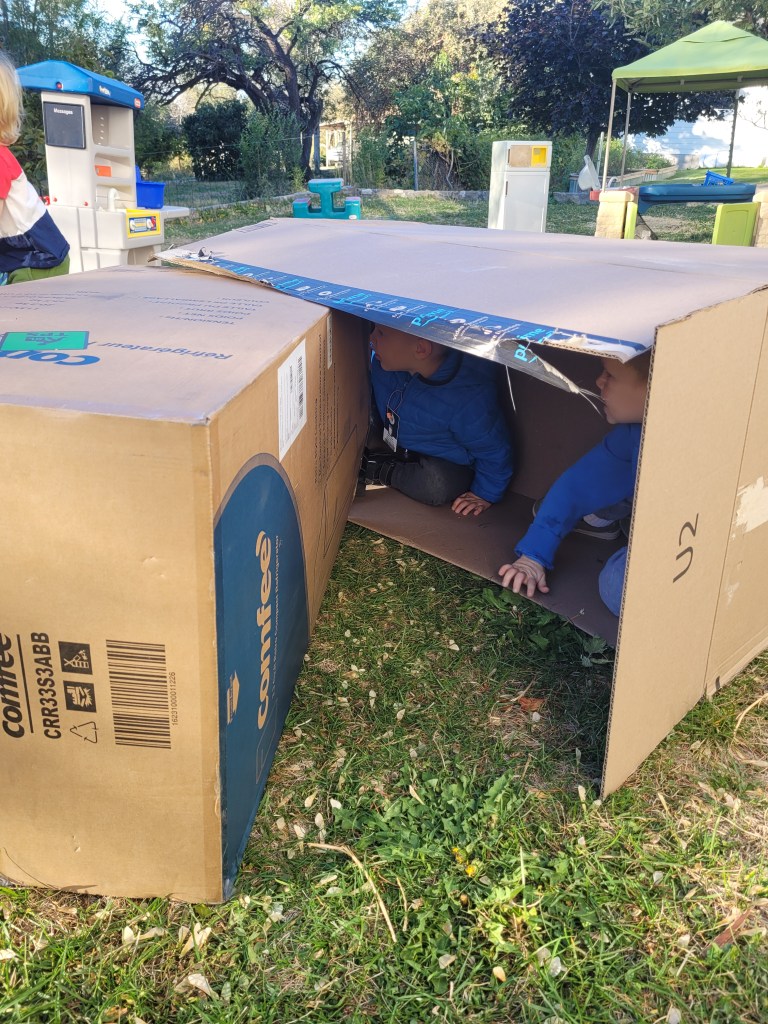
- Crawling through tunnels or tubes: Children can crawl through small spaces to practice their gross motor skills and spatial awareness.
- Running and chasing: Children can run and chase each other to practice their gross motor skills and build endurance.
- Throwing and catching: Children can throw and catch balls or other objects to practice their fine motor skills and hand-eye coordination.
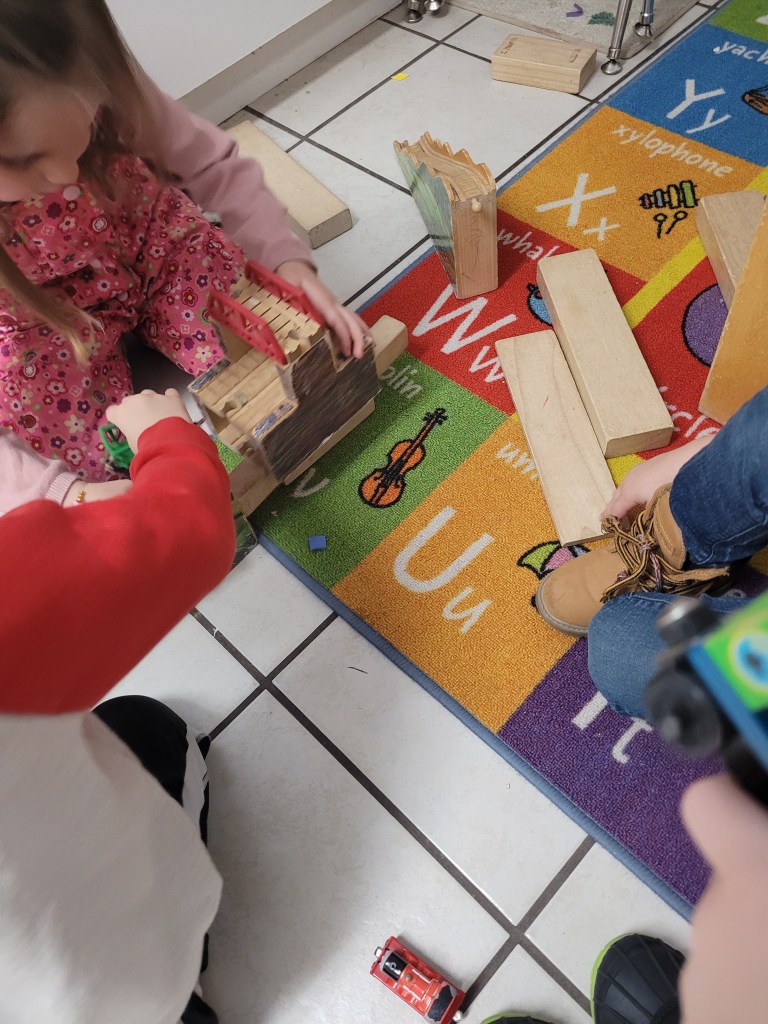
- Building and constructing: Children can build structures with blocks or other materials to practice their fine motor skills and creative thinking.
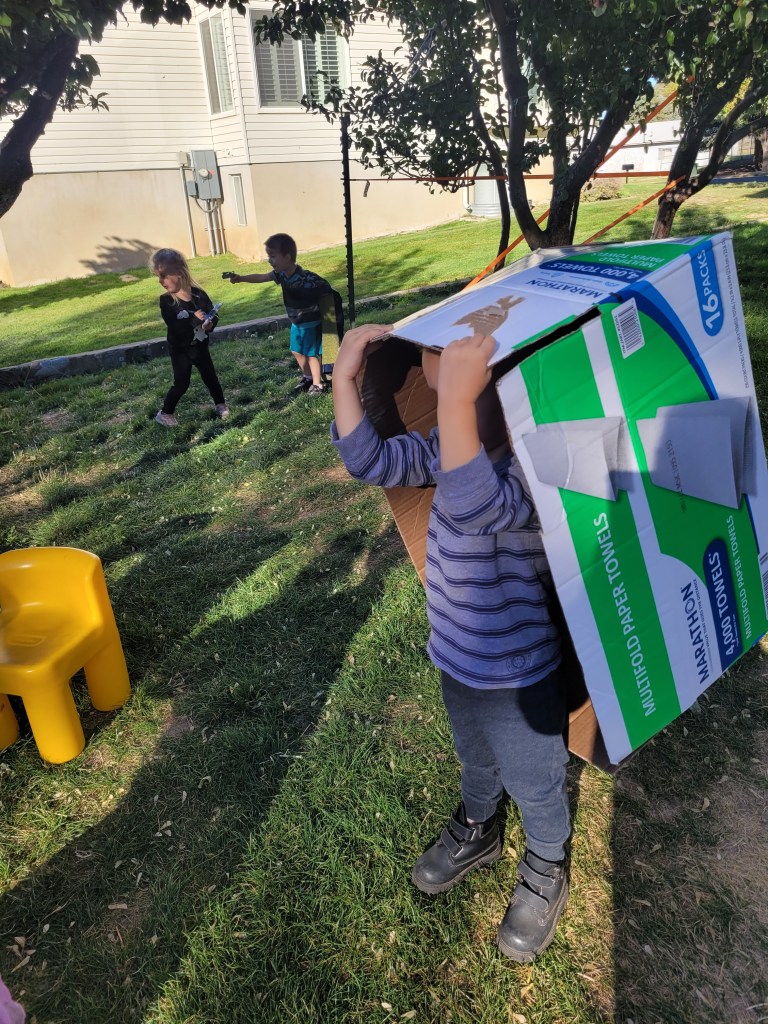
- Pretend play: Children can engage in imaginative play, such as pretending to be pirates or superheroes, to practice their social and emotional skills and creativity
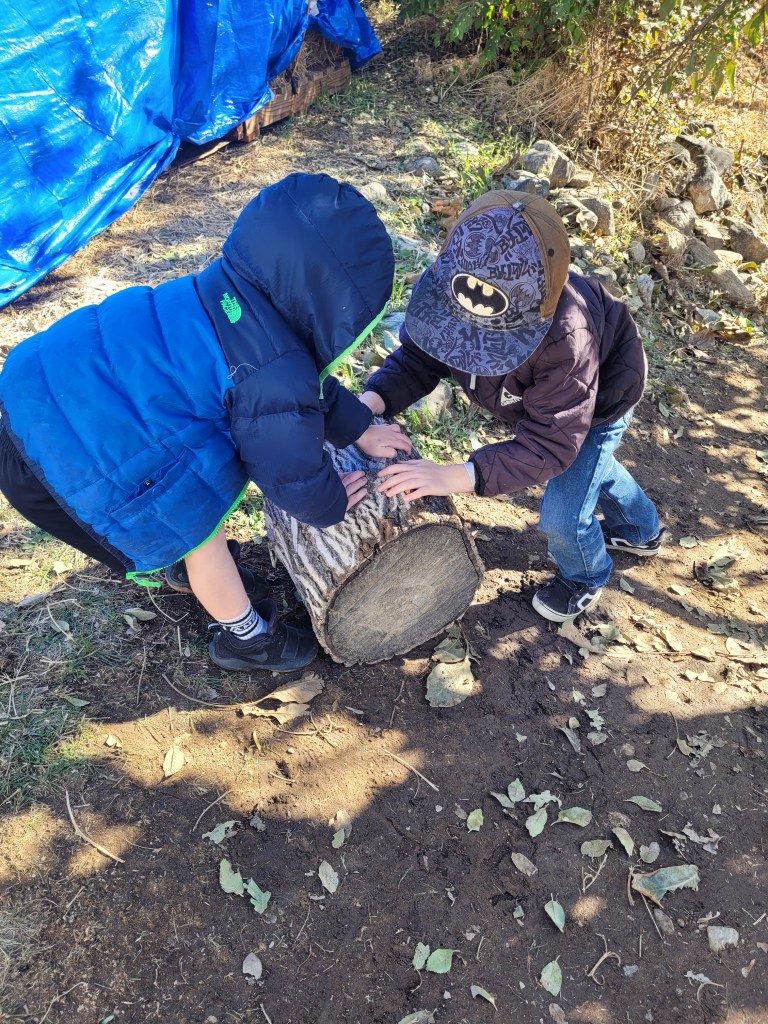
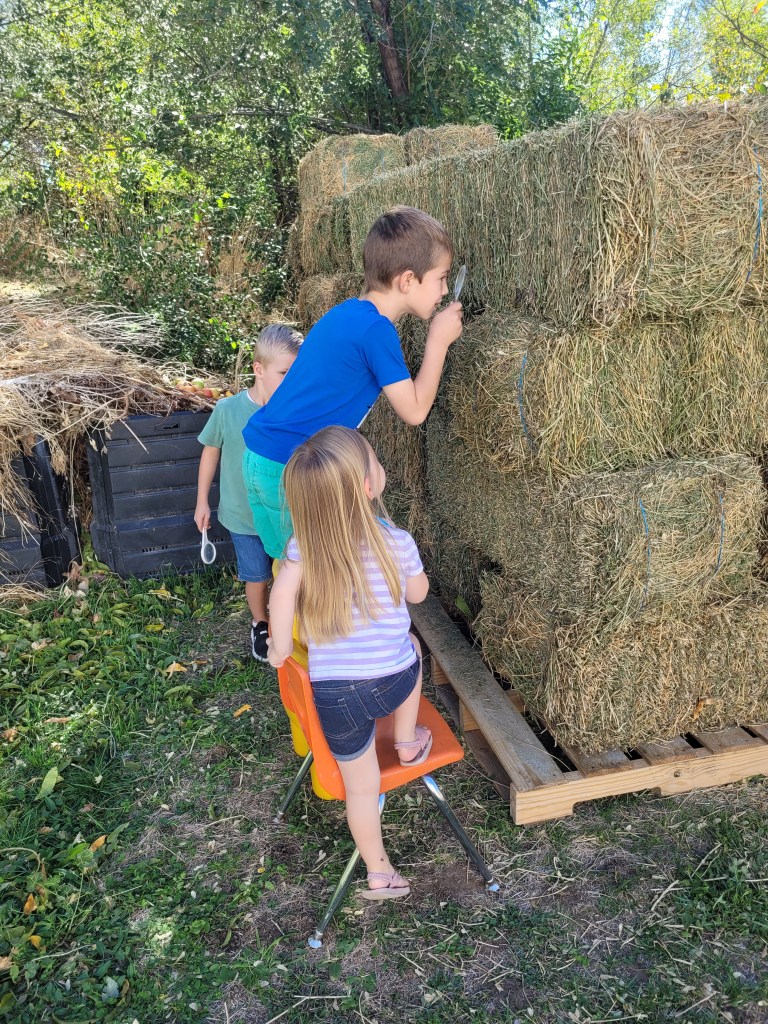
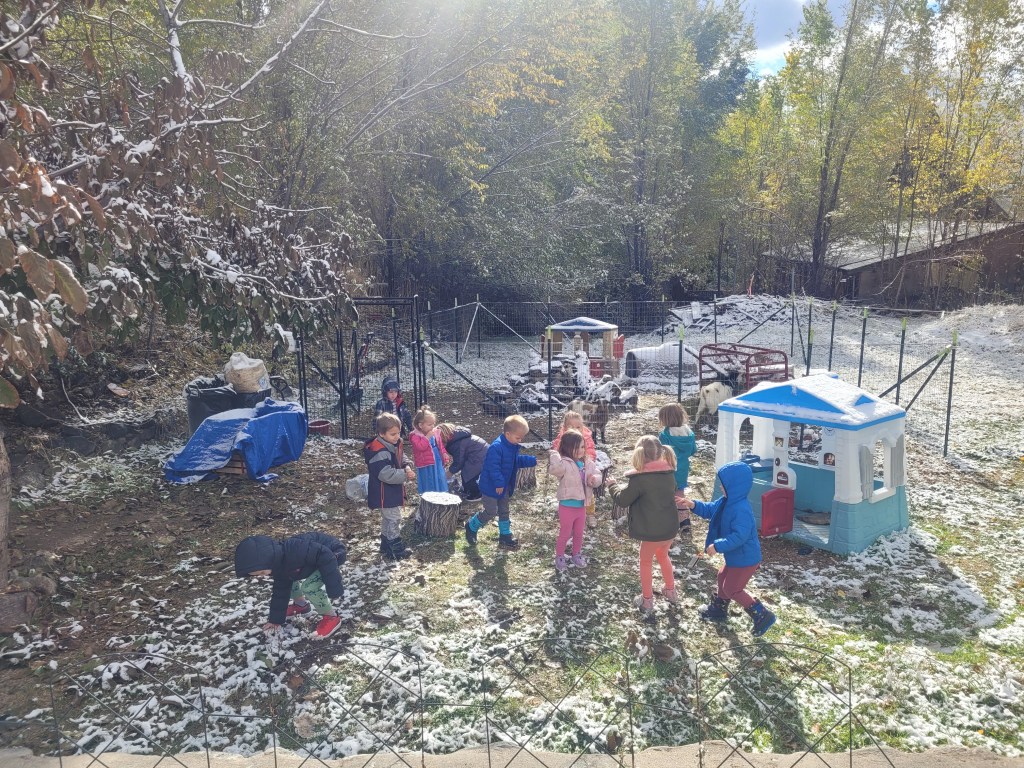
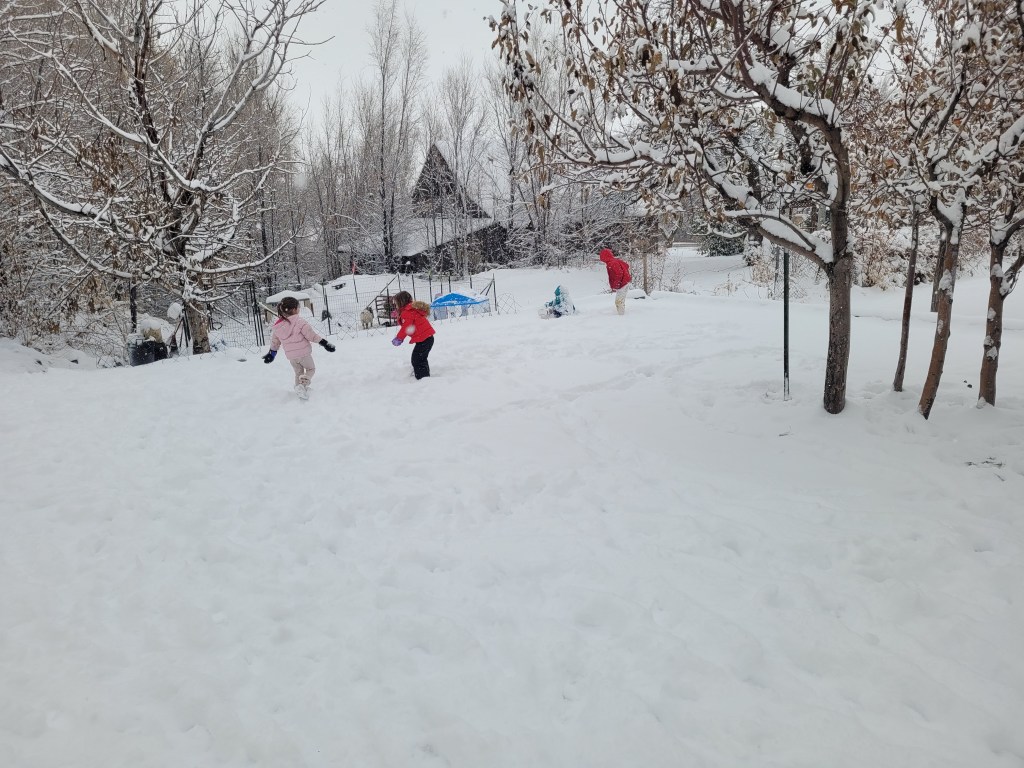
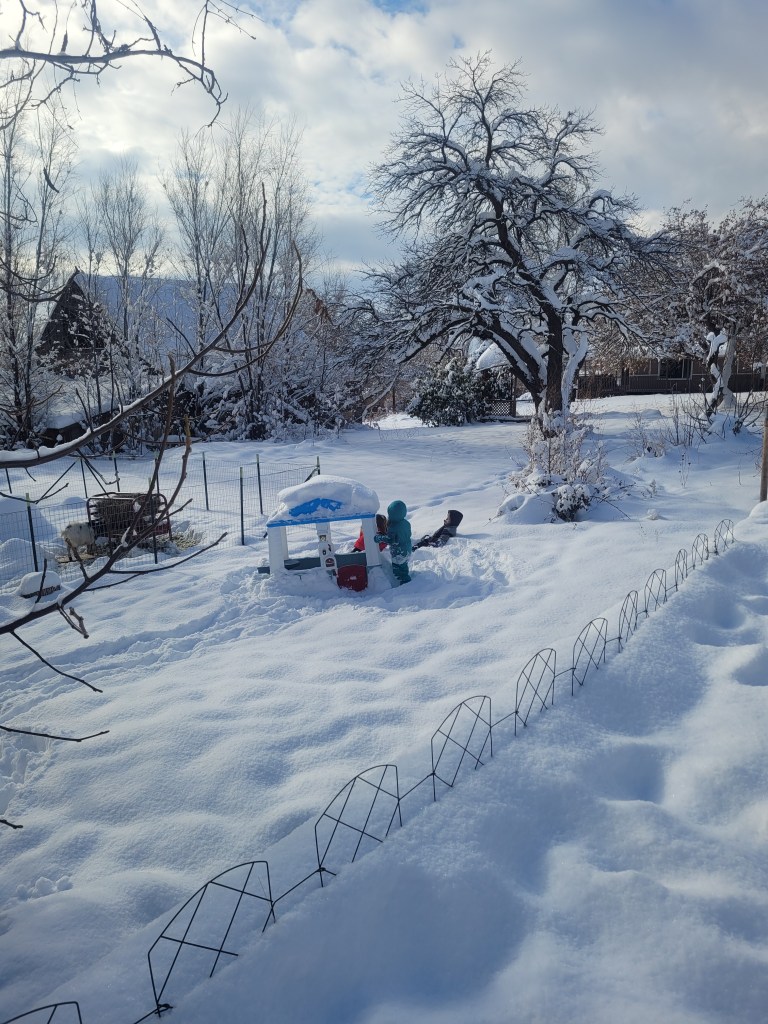
And here’s some risky play we do. This first picture is two boys rolling the stump up the hill and releasing it to watch it roll down.
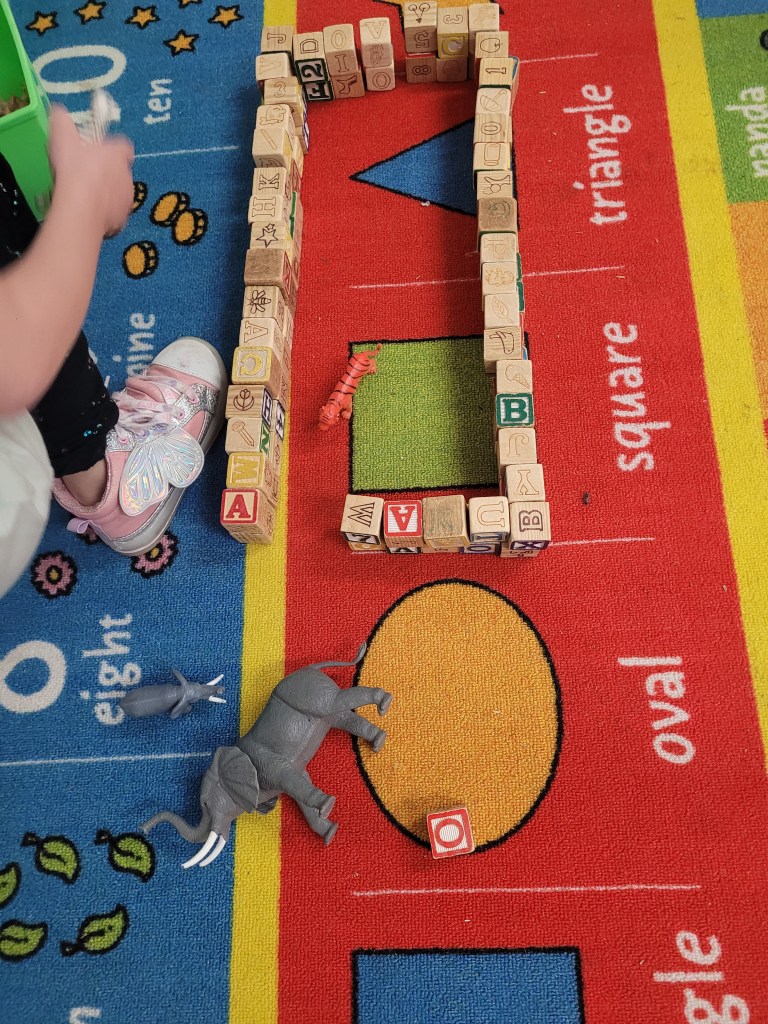
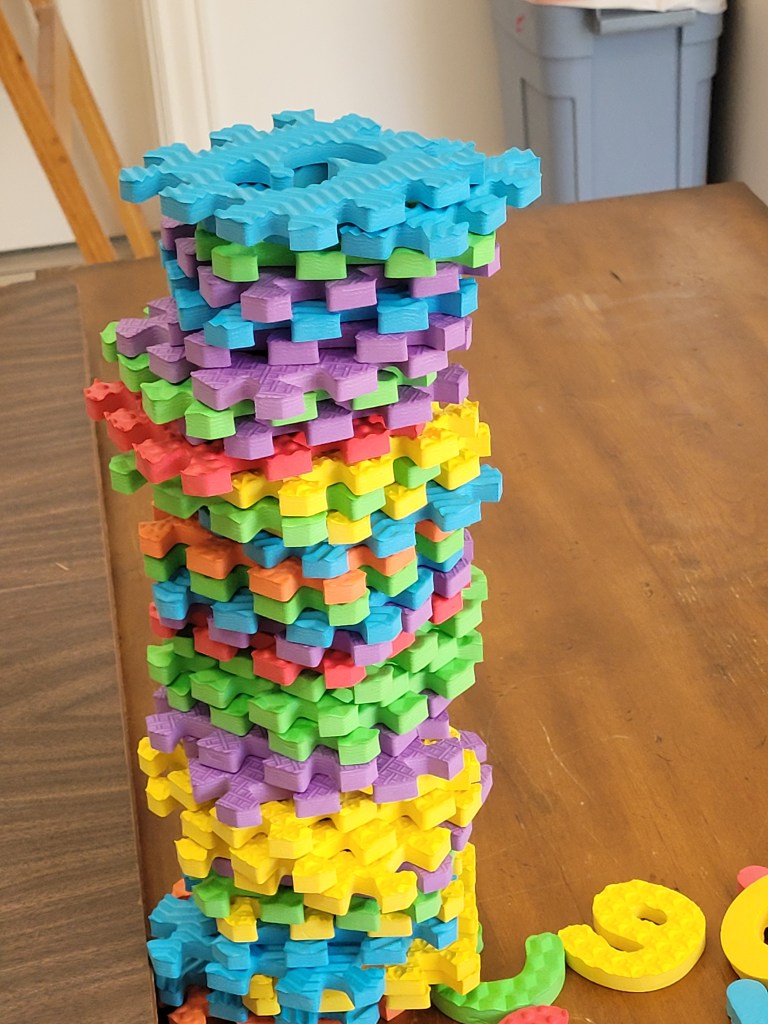
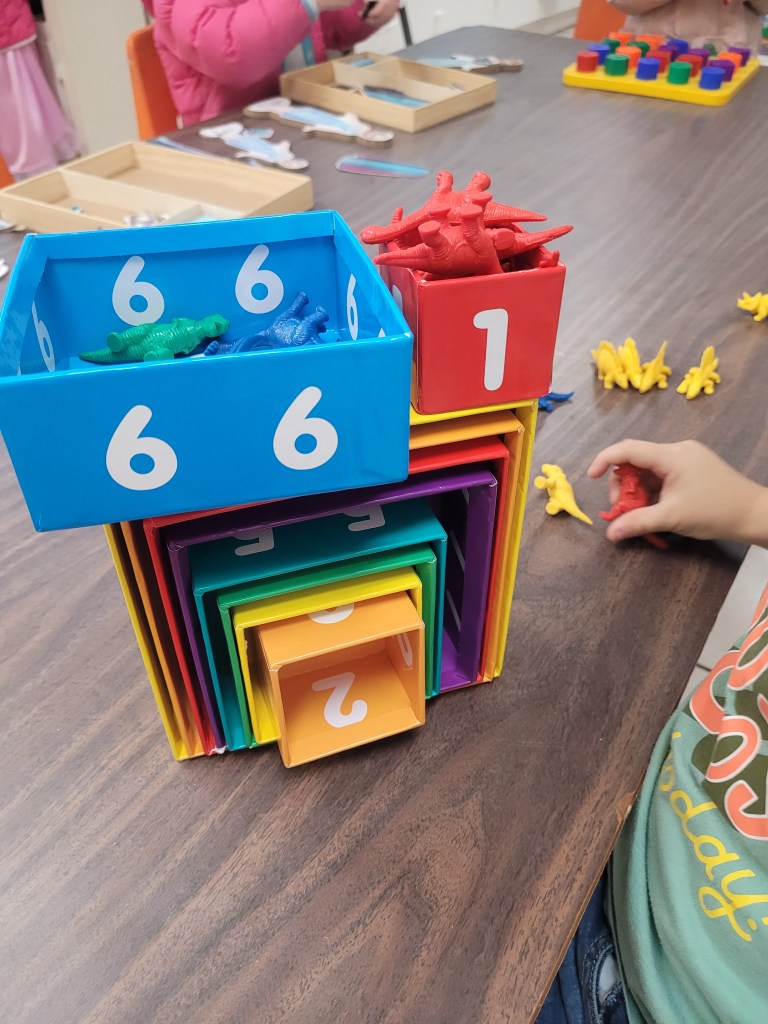
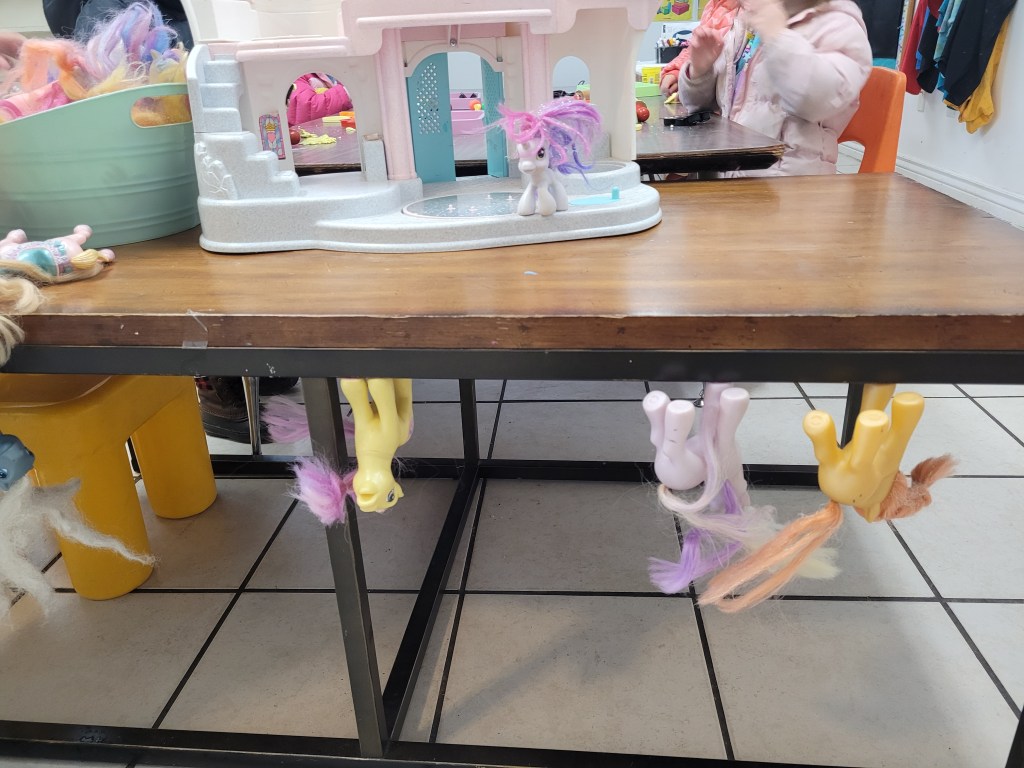
Here’s other important learning we’ve done these last few months. One important thing I learned from this class, is that the train tracks don’t always need to be on the train table, sometimes, it’s better set up on the floor.
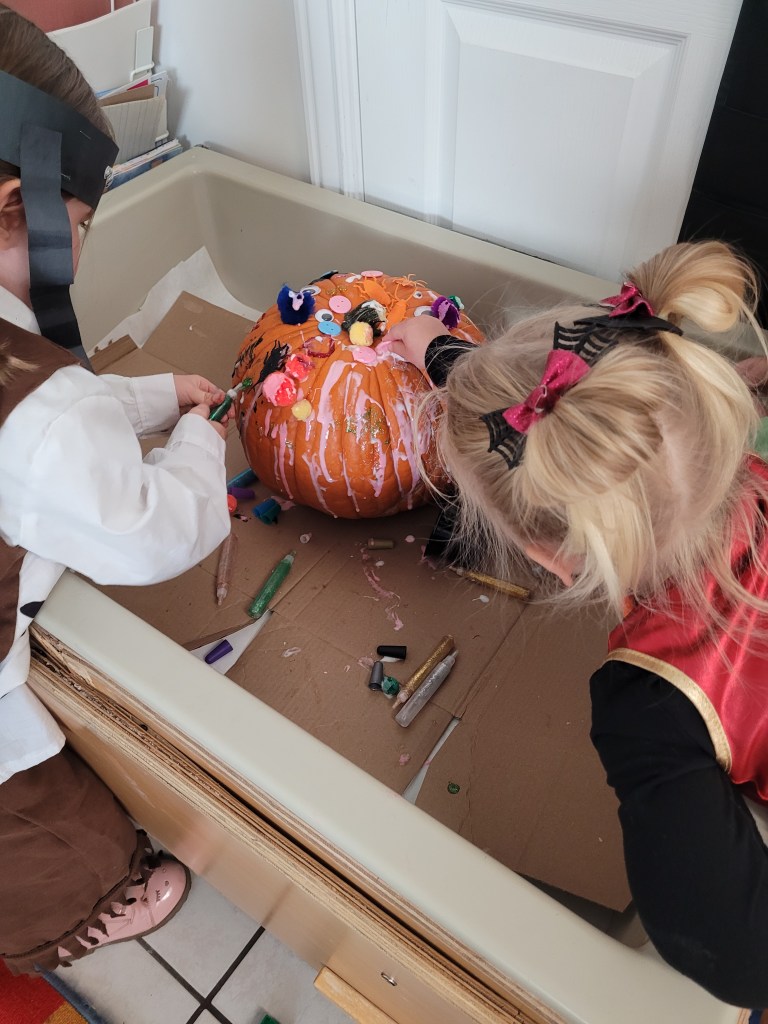
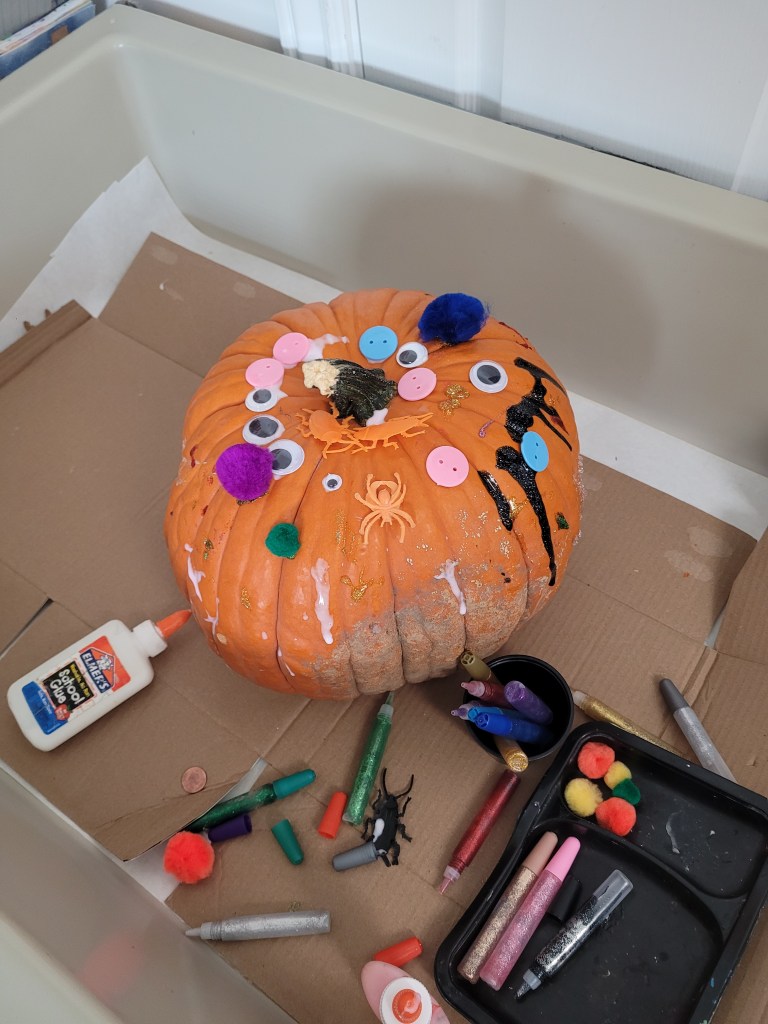


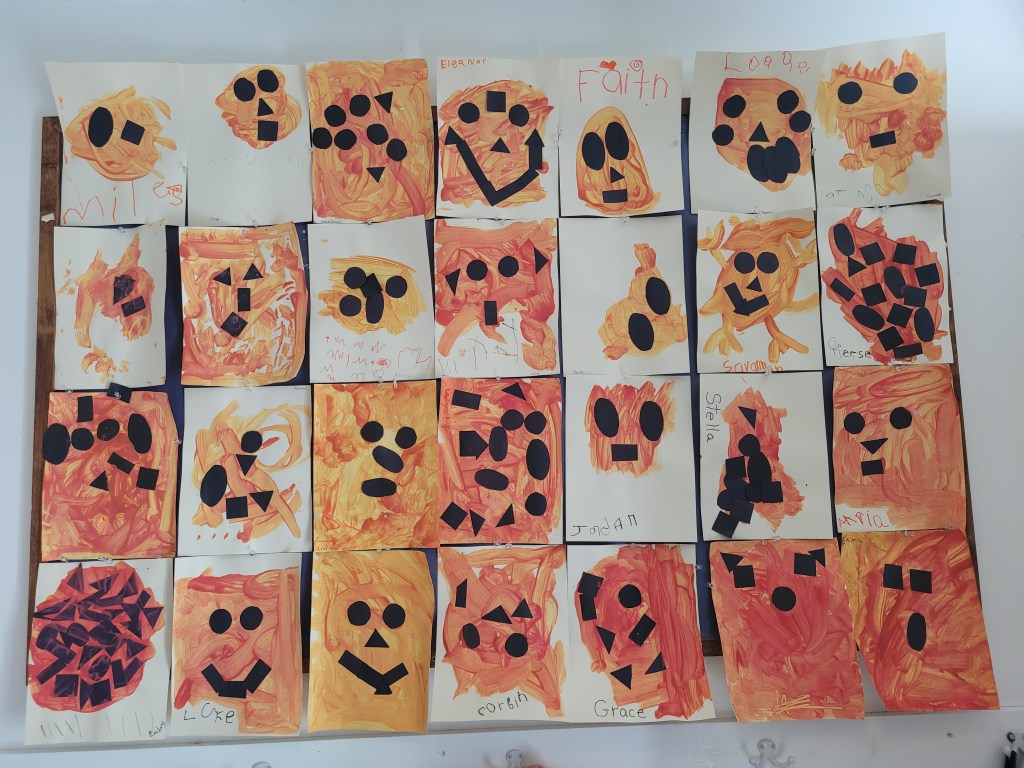
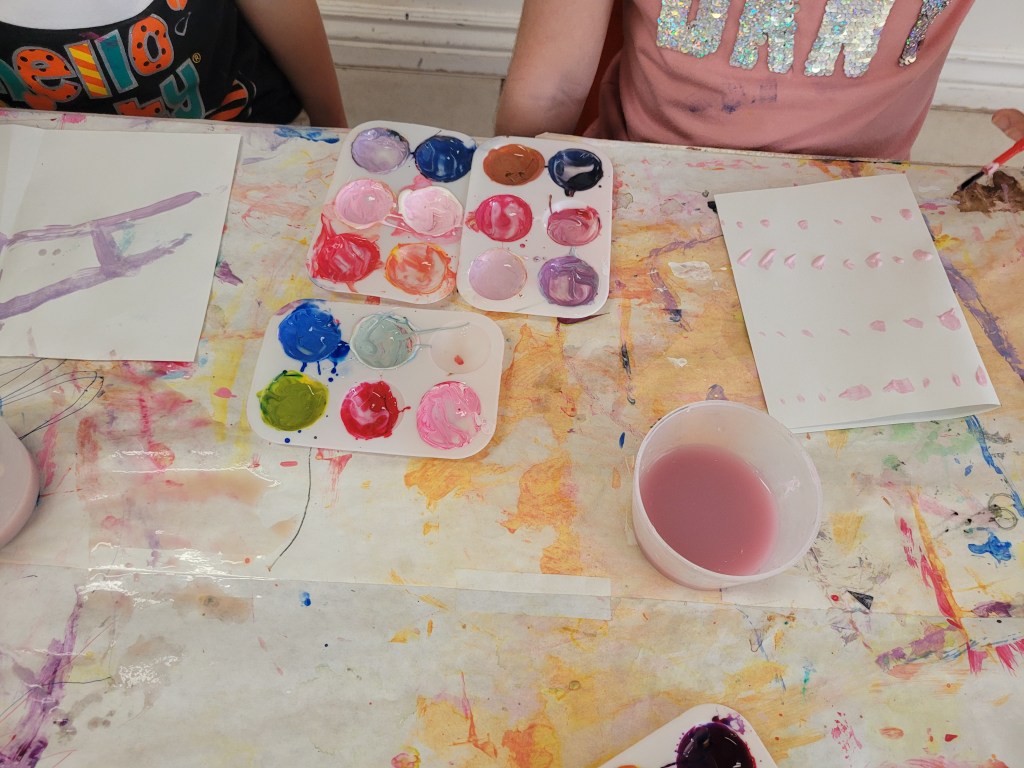
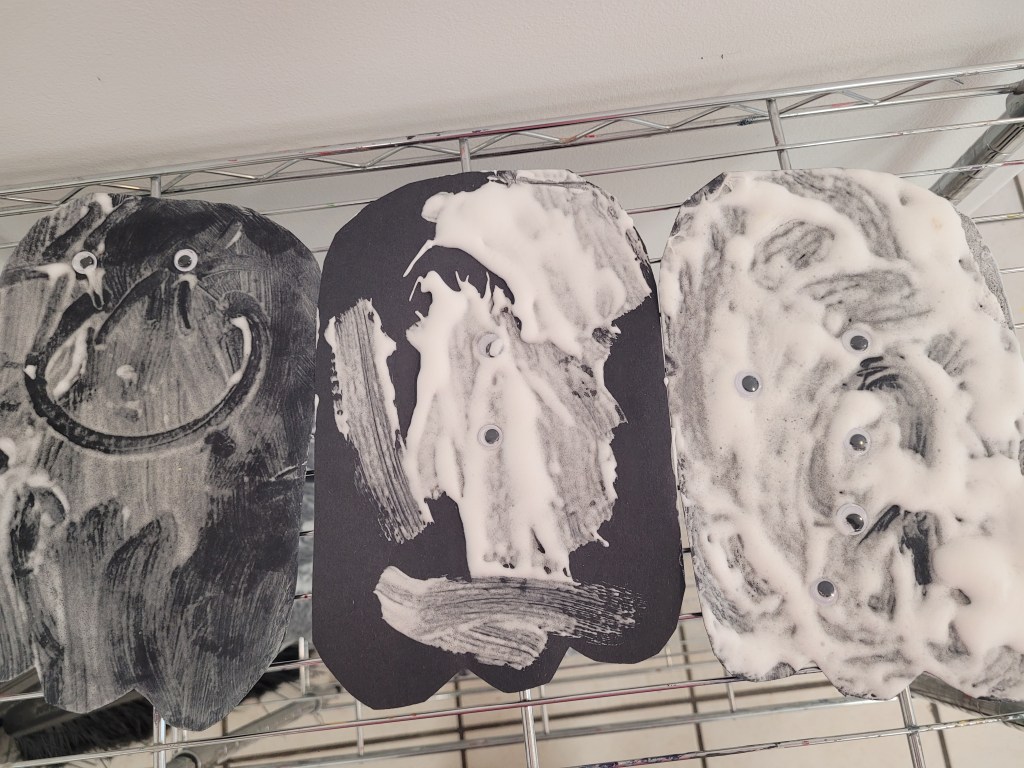
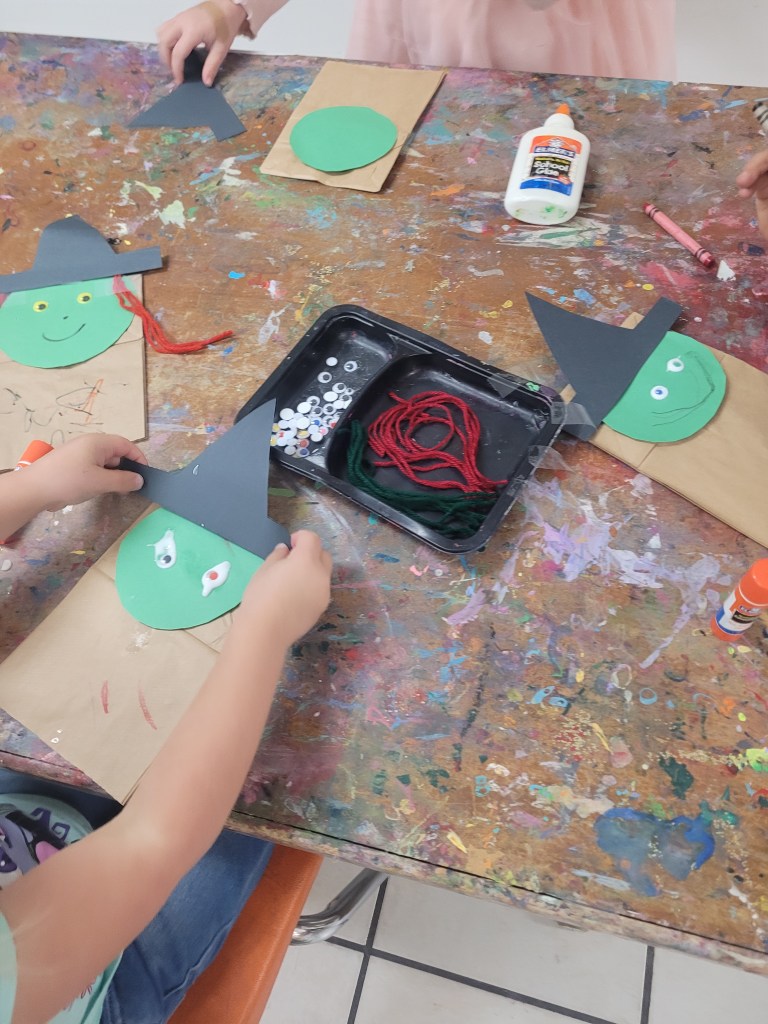
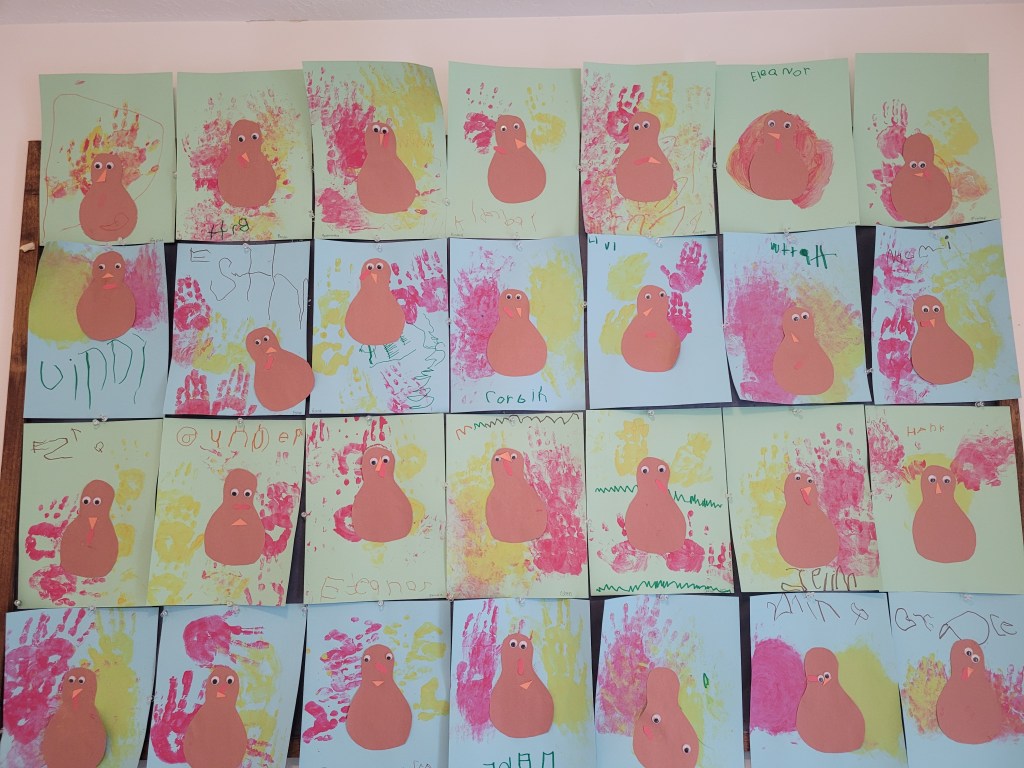
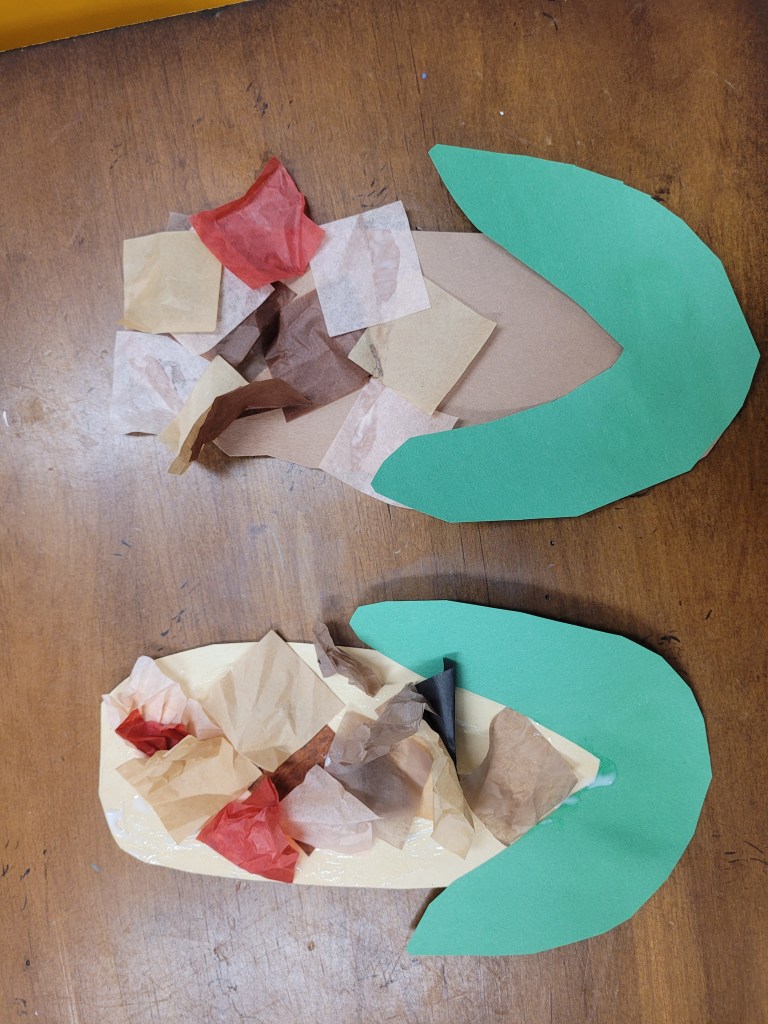
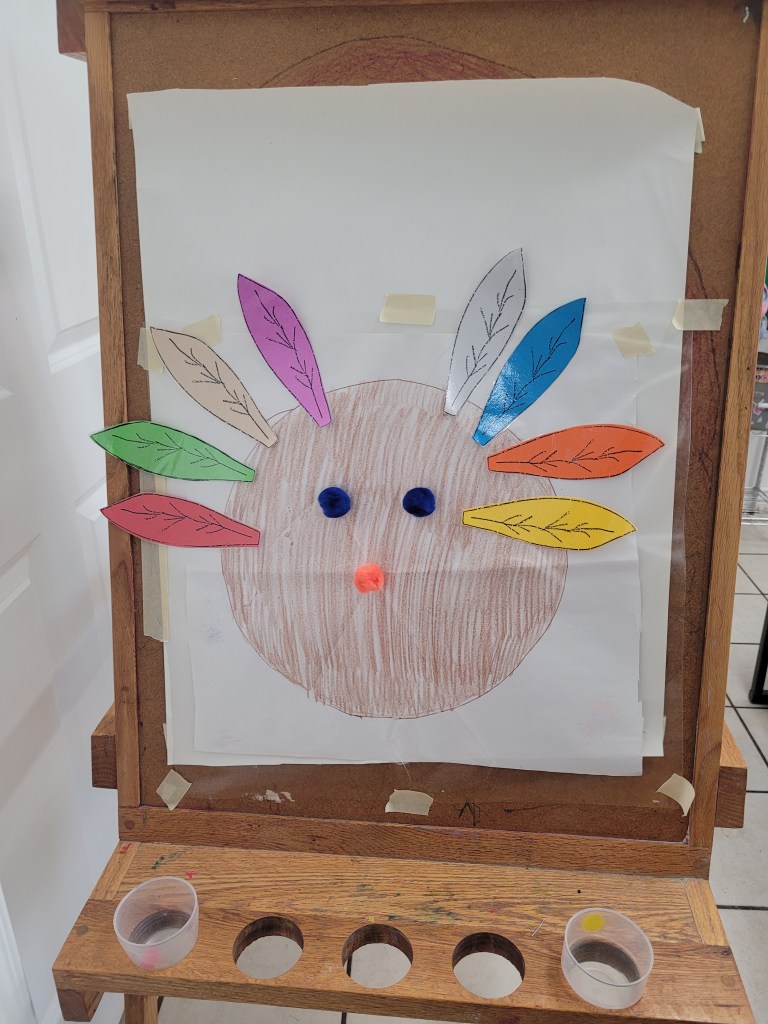
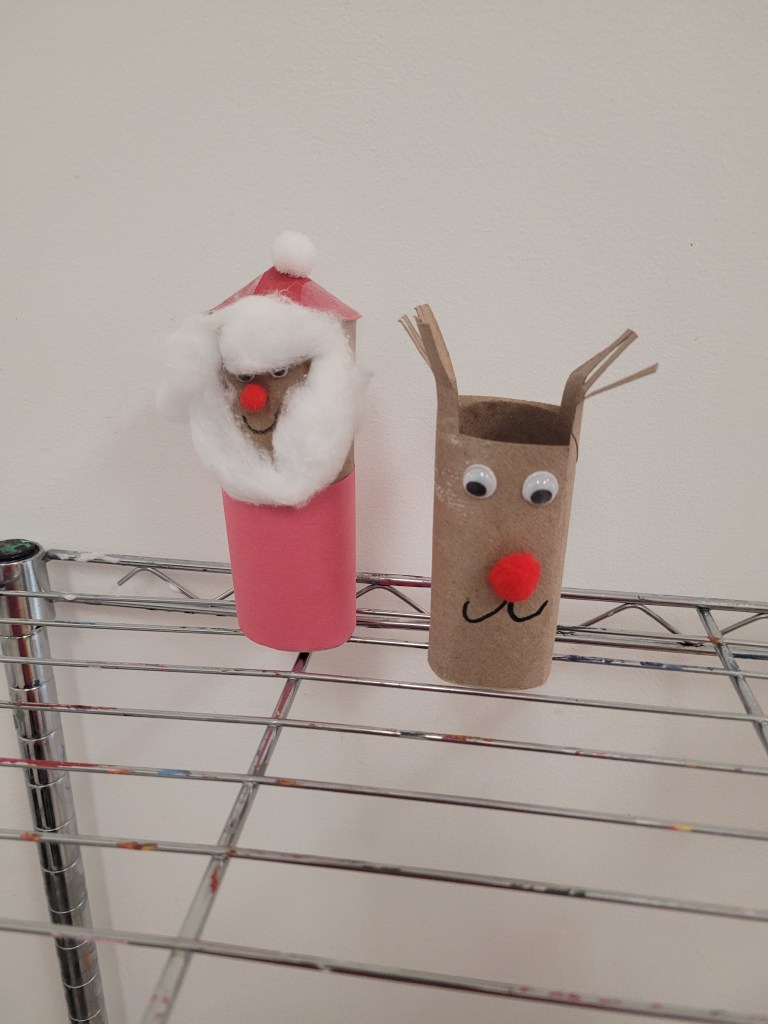
And here is some of our art:


 Miss Lori's Preschool